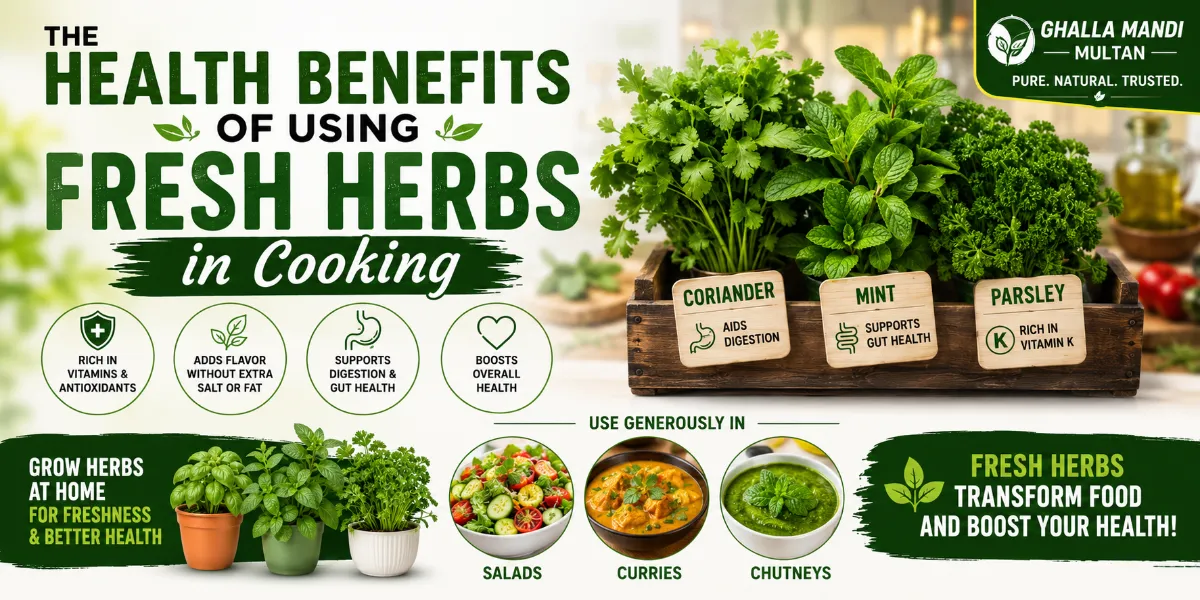

The Health Benefits of Using Fresh Herbs in Cooking
Fresh herbs are the most underrated foods in our kitchens. We use them as garnishes. A little sprinkle of coriander on top of daal. A few mint leaves in the chutney. A bit of parsley on the salad. We think of them as decoration. Something to make the food look pretty.
But fresh herbs are so much more than that. They are tiny powerhouses of nutrition. They are packed with vitamins, minerals, and antioxidants. They add incredible flavor without adding salt, fat, or calories. They transform ordinary dishes into extraordinary meals.
At Ghalla Mandi Multan, we see customers who buy herbs regularly. They know the value. They use them generously. Their food tastes better. Their health is better. And they save money on medicines because their bodies are stronger.
Let me tell you about the herbs that should be in every Pakistani kitchen. Coriander, mint, and parsley. They are cheap. They are available everywhere. And they can change your health.
Coriander – The Digestive Aid
Coriander is everywhere in Pakistani cooking. We call it dhaniya. We add it to daals, curries, salads, and chutneys. Most of us do not think about it. We just add it because that is what we have always done.
But coriander is special. It is one of the best herbs for digestion. It stimulates digestive enzymes. It helps break down food more efficiently. It reduces gas and bloating. It soothes the stomach.
If you feel heavy after meals, eat coriander. If you have indigestion, eat coriander. If you feel bloated, eat coriander. It calms your digestive system naturally.
Coriander also has antibacterial properties. It fights harmful bacteria in your gut. This supports your immune system. A healthy gut means a healthy body.
The antioxidants in coriander protect your cells from damage. They reduce inflammation. They support heart health. They may even help regulate blood sugar.
How to use coriander. Add it generously to your daals and curries. Add it to salads. Make coriander chutney. Chop it finely and sprinkle it on everything. The more you use, the more benefits you get.
Mint – The Gut Soother
Mint is another common herb. We call it pudina. We use it in chutneys, raita, salads, and drinks. It is refreshing and cooling. But it is also medicinal.
Mint is excellent for gut health. It relaxes the muscles of your digestive tract. This helps relieve indigestion and gas. It also helps with irritable bowel syndrome. People who suffer from stomach issues often find relief with mint.
Mint also fights bad breath. The essential oils in mint kill bacteria in your mouth. This is why mint is used in toothpaste and mouthwash.
The antioxidants in mint are impressive. They protect cells from damage. They reduce oxidative stress. This helps prevent chronic diseases.
Mint also has a calming effect. It reduces stress and anxiety. This is why mint tea is often used for relaxation. A cup of mint tea before bed can improve sleep quality.
How to use mint. Add it to chutneys and raita. Use it in salads. Make mint tea by steeping fresh leaves in hot water. Add it to lemonade for a refreshing drink. Mint is versatile and easy to use.
Parsley – The Vitamin K Powerhouse
Parsley is less common in Pakistani cooking. But it should be more common. It is incredibly nutritious. It is one of the most nutrient-dense foods on earth.
Parsley is rich in Vitamin K. This vitamin is essential for blood clotting. It also supports bone health. It helps your body absorb calcium. Strong bones mean fewer fractures and less osteoporosis.
Parsley also has Vitamin C. This supports your immune system. It helps your body fight infections. It also supports collagen production. Healthy skin, hair, and nails depend on Vitamin C.
The antioxidants in parsley are powerful. They protect cells from damage. They reduce inflammation. They may help prevent certain cancers. The research is promising.
Parsley also supports kidney health. It is a natural diuretic. It helps your body flush out toxins. It reduces water retention.
How to use parsley. Add it to salads. Use it as a garnish for curries and rice dishes. Make parsley chutney. Add it to soups and stews. It has a mild, fresh flavor that complements many dishes.
Why Fresh Herbs Are Better Than Dried
Dried herbs are convenient. They last longer. They are easy to store. But fresh herbs are better for your health.
Fresh herbs have higher levels of nutrients. The drying process destroys some vitamins. Vitamin C is especially fragile. Fresh herbs have much more Vitamin C than dried ones.
Fresh herbs also have more flavor. The essential oils are intact. They release their aroma when you chop or crush them. Dried herbs have lost much of their essential oils.
Fresh herbs have more antioxidants. The antioxidants degrade over time. Fresh herbs are at their peak. Dried herbs have diminished levels.
You can grow fresh herbs at home. A small pot on your windowsill is enough. Coriander, mint, and parsley all grow easily. You will always have fresh herbs available. And they will be free.
How to Store Fresh Herbs
Fresh herbs need proper storage. They wilt quickly if not stored correctly.
Wash your herbs gently. Pat them dry with a cloth. Remove any damaged leaves. Place them in a glass of water, like flowers. Cover loosely with a plastic bag. Store in the refrigerator. This keeps them fresh for up to a week.
For longer storage, chop the herbs and freeze them. You can freeze them in ice cube trays with a little water. This preserves them for months. Use them directly in cooking.
You can also dry herbs. But remember, dried herbs lose some nutrients and flavor. Use fresh when possible.
How to Add More Herbs to Your Diet
You do not need to change your diet completely. Just add herbs generously.
Add coriander to your daals, curries, and sabzis. Do not just sprinkle a little. Add a handful. The flavor will be richer. The health benefits will be greater.
Add mint to your raita and chutneys. Make mint chutney with yogurt, mint leaves, green chili, and salt. It is delicious and healthy. Add mint to lemonade for a refreshing summer drink.
Add parsley to salads. Make a parsley and onion salad with lemon juice. Add parsley to rice dishes. Garnish your biryani with fresh parsley.
Make herb chutneys. Blend coriander, mint, and parsley with green chili, salt, and lemon juice. This chutney is packed with nutrients. It goes with almost any meal.
Add herbs to your sandwiches and wraps. Fresh herbs elevate any sandwich. They add flavor and nutrition without extra calories.
The Cost Factor
Fresh herbs are cheap. A small bunch costs almost nothing. You can buy them from any market. You can grow them at home for free.
At Ghalla Mandi Multan, we sell fresh herbs daily. Coriander, mint, and parsley. Fresh stock every morning. Wholesale prices for bulk orders. You can buy enough for the whole week.
Fresh herbs are more affordable than many processed foods. And they are much healthier. Skip the expensive sauces and flavorings. Use herbs instead. Your wallet and your health will benefit.
Final Thoughts
Fresh herbs are not just garnish. They are nutrition powerhouses. Coriander aids digestion. Mint soothes your gut. Parsley is rich in Vitamin K. All are packed with antioxidants.
They add flavor without salt, fat, or calories. They transform ordinary meals into healthy, delicious feasts. They are cheap and easy to grow.
Start using fresh herbs generously. Add them to everything. Your food will taste better. Your body will feel better. Your health will improve.
At Ghalla Mandi Multan, we supply fresh herbs daily. Premium quality at wholesale prices. Delivered to your door within twenty-four hours.
Ghalla Mandi Multan – Your trusted source for fresh herbs and all your grocery needs. Visit ghallamandimultan.com to order today.
Add herbs generously. Taste the difference. Feel the difference.